I want to learn how to make dolma

I wish I could say I made these dishes, but I didn’t. Or even knew HOW to make them.

My mother-in-law cooked dolma and gatnabour while Vartan, Hagop and I went out for ice cream.
Even though I want to learn how to make these dishes, and have asked my MIL to let me know when she’s planning to cook so I can help, the necessities of everyday life get in the way. She had an hour to herself, some old zucchini and milk that was about to expire, and just made food for the week. But it makes me a little sad every time I miss an opportunity to learn how to cook these dishes, because life is so short. It makes me afraid that some accident will happen, we’ll lose her, and then I won’t have anyone at home to teach me. I’ll still learn myself someday… But it feels like “someday” keeps getting further and further away, because I keep putting it off or other things get prioritized.

Memorizing the Hayr Mer

Confession:  I don’t know the Hayr Mer.  I’ve been going to an Armenian Church for almost 10 years, but I don’t have the Lord’s Prayer memorized in Armenian.

Why?  Because I’ve never been pressured to say it out loud independently.  I can always say it along with everyone else in church, a split second behind everyone else.  Same with singing the Hayr Mer.  I know the music, I know the words for certain phrases, but if you asked me to sing it solo, I’d only get halfway through before losing the words.

Now we’re trying to incorporate saying the Hayr Mer before bedtime, with our son*.  And I’m faltering.  So it’s well past time for me to learn.

(*When I was growing up, my Dad would always recite the Lord’s Prayer every night before we went to sleep, and it’s one of the fondest, warmest memories of my childhood.  I have his voice saying that prayer on my soul.  I want to repeat that with my kids.)

Here are some flashcards I’ve made to help myself (and maybe one of you!) memorize the Hayr Mer:

And this from Der Hovnan:  All words in the Hayr Mer, and their meanings in English: https://quizlet.com/29600335/hayr-mer-our-father-flash-cards/

Thoughts on the 2018 Armenian Diaspora Survey report

Came across this article in Massis Post, “Armenian Diaspora Opinion Survey Results Published,” and found my way to the “Armenian Diaspora Survey Pilot Project 2018 Report” (150 pages).  SUPER interesting.

The pilot year, 2018, surveyed 4 cities with active Armenian populations: Marseilles, Boston, Cairo, and Pasadena.  They’ll choose 4 new cities and do a new (shorter) survey next year.

Armenian diaspora opinion, pilot project 2018 cover page

More analysis to come, after I read through the data summaries and not just the mini-articles… but for now, here are some highlights and thoughts from the Armenian Diaspora Opinion, Pilot Project in 2018:

On identity:

  • Identifying one’s self as an Armenian from a particular community (Bolsetsi, Romanahye, etc.) lasts generations.  More people reported that they feel “more at home” or “like family” with Armenians from the same region or city of origin, and answers were consistent among age groups.
  • The Armenian LANGUAGE is a defining attribute of Armenian identity – especially for 1st generation immigrants (less surprising), and (more surprising to me) for 72% or the youngest age group (36 or younger).  Matches what I’ve seen anecdotally… younger people in the Armenian diaspora (in Boston at least) long for resources to learn and practice Western Armenian.
  • A notable difference between Boston and the other communities surveyed – only 34% of respondents thought it was “very important” to marry/find an Armenian spouse/life partner.  In other communities it was more than 50%.  (Thanks for welcoming me, Armenian Bostonians!  Though I do hear you, that mixed marriages can be a threat to the strength of the Armenian diaspora, and it’s a conversation worth having another day.)

On religion, spirituality, church:

  • Although 87% of Armenians consider Christianity “an important part of Armenian identity,” “only 14-16% of those surveyed attend church weekly or monthly.”  Still, 70% felt it was important to be married in an Armenian church…?  So they’re going for sacraments.  Finally some DATA behind something we’ve seen for a long time.  This is an important challenge (and opportunity) in our church.
  • There’s some interesting data on spirituality and whether respondents believe in God, and the respondent’s spiritual life, which matches the PEW Research Center study that came out about religious beliefs and national belonging in 2018.  Armenians tended to be more philosophical than their neighboring countries, among the highest of all surveyed nations, and report an active spiritual life or desire for one.  Similar in these diaspora communities.
  • “43% of respondents felt that women should be ordained in Armenian churches, while 30% had no opinion on the matter.” — head’s up to diocesan delegates!

Community engagement

  • 39% of Boston respondents listed “distractions of career” as one of the main reasons they are not active in Armenian organizations or events.  Not surprised!  Boston is a gritty career-town.  Wondering if we should do more networking and career-related activities in the community then?  Or market our current ones as a “break” from the grind of your 9-5, etc.
  • A big hearty YES, ME TOO, to what the respondents did want: “lectures and activities on Armenian history, language, art, music, cooking, dance, etc.” (45%)

Language and education

  • Nearly 60% of all respondents say that knowing the Armenian language is very important to Armenian identity.  This was one of the (if not the) most emphatic “very important” responses in the whole survey.
  • People who didn’t have access to Armenian school (full day, or weekend) themselves growing up are more interested in sending their own kids to Armenian educational institutions

Connections to Armenia and other Armenian communities

  • “75% of those surveyed have visited the country at least once, while 93% intend to visit”
  • Armenians in the Boston area who donate money to Armenian organizations do so almost exclusively (75-100%).  I work in philanthropy and am very interested in this line of questioning.  More research and possibly another post to come.
  • The data suggests that Armenians still have strong ties to the Middle East, where many of their families may have came from, even generations later.  Supporting Armenians and Christians in the Middle East is “fairly/very important” for the overwhelming majority of respondents.

Western Armenian Alphabet, Lesson 2: False Friends

In Lesson 1 (A; and B), we learned that there are some characters in the Armenian alphabet that are very similar to the English alphabet. When the letters also sound the same, that’s great! When they don’t… it’s less than helpful. These “false friends” look like English letters, but are pronounced differently in Western Armenian, so they can really trip you up.

Armenianաոսցւյ
English look-alikewnugLj
Actual pronunciationa(v)ostsvh

Here’s how I remembered them:

  1. ա ≠ w, ա = a
    • I found this to be an easier letter to remember, just because it’s the first letter of the Armenian alphabet. I already had it down, with “ayp, pen, kim.”
    • But you could also think of “awww” – looks like a w, is really an a.
  2. ո ≠ n, ո = vo
    • NO, not an “n,” this is a VO
  3. ս ≠ u, ս = s
    • u looks like a Smile, smile starts with “s”
  4. ց ≠ g, ց = ts
    • goats
  5. ւ ≠ L, ւ = v
    • ւ o v e
  6. յ ≠ j, յ = h
    • յ looks like a hook, hook starts with “h”

Other tricks:

  • I kept mixing up “u” and “ո,” because they’re shaped similarly. Grouping similar shapes and drilling them, or coming up with mnemonics for why they were different helped. e. “u” is “ո” upside down, like Snow falling from the ground to the sky.
  • Read this post about other tricks for learning the alphabet, and see if any of them work for you: Top tips for learning the Western Armenian alphabet
  • Sometimes it helps to look at these letters in different fonts, to see how they’re differentiated a bit more from the Latin/English letters:

CONGRATULATIONS
You’ve learned 15 Armenian letters! You’re almost halfway there!


Test yourself:
You’ve already learned two Armenian equivalents for the letter “o” – what are they?
………. Highlight in between the brackets for the answer: [ո & օ]
And two for the letter “h” – what are they?
………. Highlight in between the brackets for the answer: [հ & յ]

Homework:
Find an Armenian book or newspaper and write out 6 words that contain ONLY letters that you have learned so far.

Follow along in the St. Nersess online learning course, and/or using these Alphabet worksheets

Or try this worksheet I made to help yourself differentiate:

Access the rest of the lessons in this series here:

Translation project, our oud, Armenian Festival

It was a super busy day at work, and turned out to be a super busy day with the Armenian-life too.
I heard back from people about two projects we’ve been working on — 1. Getting two books translated from Armenian into English, and 2. Investigating an old oud we have in the family.
Nairi Translation Services (translator in London, England) got back to us and clarified that the end result of working with them would be a book (or two!) ready for publication.  I wasn’t certain of the intellectual property rights, or level of the translation, but it seems like that’s not an issue.  They’d do all of the translation, copy-editing, language editing and proofreading.  My next steps are to contact publishing houses (Gomidas Institute probably, also in London), and to secure funding for the translations.  The book on Hagopos Ayvazian was quoted at $900 USD, and the book on Armash Seminary at $3,900 in case anyone wants to donate…!  😉
20190530_2154273485927561254351869.jpg
The oud is something we’ve had in the family for years.  It belonged to Vartan’s grandmother, Maryam Ayvazian.  Maryam was Hagopos Ayvazian’s daughter, and a musician in her own right.  She apparently taught Udi Hrant for a little while when he was young (though they were the same age, and I’m not sure how the timing would’ve worked out, based on Hrant Kenkulian’s Wikipedia page).  Anyway.  We knew the oud was old, but not much else about it.  Sent photos to Chris Pantazelos of Spartan Instruments in Lowell, Massachusetts.  His first impression was that it’s good work, but probably made by an amateur rather than a well-known luthier.  He referred me to the brilliant musician and musicologist Mehmet Sanlıkol, also in Boston, who was going to try and help translate the handwritten label inside of the oud and give his impressions.  Mehmet got back to me today, and although the handwriting was too outdated and faded for him to read himself, I feel like we’ve got next steps on that project too.  (Also, small world, Mehmet composed something for the PALS children’s chorus I was in as a kid!  I don’t remember the piece, but the timing was right – I would’ve been there then!)  We’re going to try to take better pictures of the label, play around with Photoshop settings to make the label clearer, and find a real Ottoman history person who may be able to read part of the label.
20190601_175741-013485782770886522653.jpeg
In other news… my mother-in-law made losh tonight, and we went to church to help skewer chicken and meat ahead of the St. James Armenian Festival this Sunday.  If anyone is in the Greater Boston Area, looking for something fun to do on Sunday, June 9th, 12-5pm, you should definitely come by…!


Western Armenian Alphabet, Lesson 1B: E, E, E

First, read: Western Armenian Alphabet, Lesson 1A:  You CAN Learn to Read Armenian


Part 2 of this lesson introduces you to three very key VOWELS in Armenian: E, E, E
Armenian:
է
ե
ի
English:
e
(y)e
ee
  • է = “eh,” like in “met”
  • ե = “e” in the middle of a word; “ye” if it starts a word; “y” before a vowel, (եա, եօ, եու = ya, yo, yoo)
  • ի = “i” or “ee,” like in “casino” or “event”
 
Distinguishing between է & ե
 
I found this to be really difficult.  My husband Vartan kept saying things like, “ե” is the one for “եւ,” and “է” is the holy symbol, often above the altar.  Sure, that made sense to him… but having grown up without any exposure to Armenian at all, those references didn’t stick with me.
 
What did work, was looking at the shapes of the letters, and anthropomorphizing them.  (You’ll see this started a trend for me…  trchnakir.)
 
է looks just like a person sitting, chilling out, with their legs hanging down.  Maybe like the side view of a person in a car, with their arms out on the steering wheel.  It’s relaxed, like the sound the letter makes, “Ehhhh….”
 
ե on the other hand is more active.  If you’re still imagining a person, it looks almost like a startled person, sitting with their feet up like they’re about to stand.  I think of a person that just sat on a tack, and shouts “yeee!” as they jump up.
 
Here are two other ideas, I think I stole from someone’s “mem” on the Memrise app:
 
 
Now if only I could get the hang of spelling with է and ե!  I’m sure there are tips and tricks for that too, I’ll let you know when I learn them.


Now you know NINE Armenian letters:
օհլբրռէեի
 
And you can practice your Armenian by reading these words out loud:
Armenian Transliteration English Translation
լի li for
երբ yerp when
բերի peri bring
հեր her  
լրէ lreh full
լեհ leh  
եբեր yeper  
լեր ler tongue
բեռ per burden/load
ելիր elir come
հեռի heri far
բեր per take
օլէ oleh  
հօր hor father
լեռ ler mountain
բերէ pereh take
իր ir his/her
 
Hooray!


You can practice writing out the letters using these Alphabet worksheets
They’re in the same order as these lessons will be, so you can follow along as we go.
 
Image.png Image.png
Image.png
Image.png
Image.png
Image.png

Next Lesson: Western Armenian Alphabet, Lesson 2: False Friends

Western Armenian Alphabet, Lesson 1A:  You CAN Learn to Read Armenian

For a disclaimer/background, read this: Introduction to Western Armenian Alphabet Lessons
To jump right in, keep going…!

If you know the English alphabet, there are some letters in the Armenian alphabet that will look very similar to you! In fact, six letters are so similar in shape and in pronunciation, that it is fair to say you already know them.

 
These letters are:
Armenian: օ հ լ բ ր ռ
English: o h l p r r
(Aside: Yes, there are two “Rr” sounds in Armenian. There are slight differences in pronunciation between them, but that’s for another post. The rest of the letters are pronounced just the way you think they would be.)
 
With these six letters, you can already spell some Armenian words:
  • օր = “or” = day
  • հօր = “hor” = Father (i.e. “Park Hor yev Vortvo yev Hokvooyn Surpo”)
 
Don’t look now, but you’re reading Armenian!


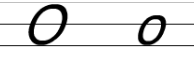
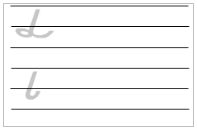
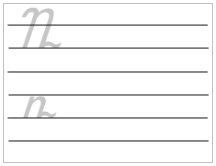
Now, Armenian letters can look quite different in print vs handwriting, and we’ll get there with later lessons. BUT, if you’re interested, you can see the equivalent letters below.
 
And you can practice writing out the letters using these Alphabet worksheets
They’re in the same order as these lessons will be, so you can follow along as we go.


Image.png

Image

Image

Image

Image

Image

Image

Image


Image.png

Image

Image

Image